
STRATEGIC DEVELOPMENT
Hotel Development for Complex,
High-Value Properties
About The Peebles Corporation
About The Peebles Corporation
Hotel Development for Complex, High-Value Properties
The Peebles Corporation develops hotel properties where the opportunity extends beyond simply constructing a new building. Our experience includes branded hotels, historic properties, adaptive reuse, public-private partnerships, urban redevelopment and projects where public objectives must be balanced with private investment and long-term commercial performance.
Successful Hotel Development
Every hotel development opportunity requires its own strategy.
Vacant parcels, historic buildings, public land and private acquisitions present different challenges. The plan should reflect the site, market and intended hotel concept.
The Peebles Corporation brings experience across major U.S. markets in hospitality, residential, retail and mixed-use development. This broader perspective helps evaluate how a hotel can support redevelopment, preserve historic architecture, activate public land or complement surrounding uses.
The goal is to identify the development approach that unlocks the property’s greatest value.
KEY DEVELOPMENT QUESTIONS
+ How should the project fit the neighborhood and market?
+ What is the highest and best use of the property?
+ What public approvals or partnerships will be required?
+ How can the project create lasting value for all stakeholders?
+ How can existing architectural or historic assets be incorporated?
+ What type of hotel and brand positioning fit the opportunity?
+ Who needs to align before development begins?
+ How can the project deliver lasting investor, community and public value?
Hotel Planning and Development Starts with the Site
Hotel Planning and Development Starts with the Site
Every hotel development opportunity requires its own strategy.
Vacant parcels, historic buildings, public land and private acquisitions present different challenges. The plan should reflect the site, market and intended hotel concept.
The Peebles Corporation brings experience across major U.S. markets in hospitality, residential, retail and mixed-use development. This broader perspective helps evaluate how a hotel can support redevelopment, preserve historic architecture, activate public land or complement surrounding uses.
The goal is to identify the development approach that unlocks the property’s greatest value.
HOTEL DEVELOPMENT EXPERIENCE
Public-Private Hotel Development
Municipal hotel development must balance public goals with private investment. The Peebles Corporation brings public-private hotel development experience across major U.S. cities.
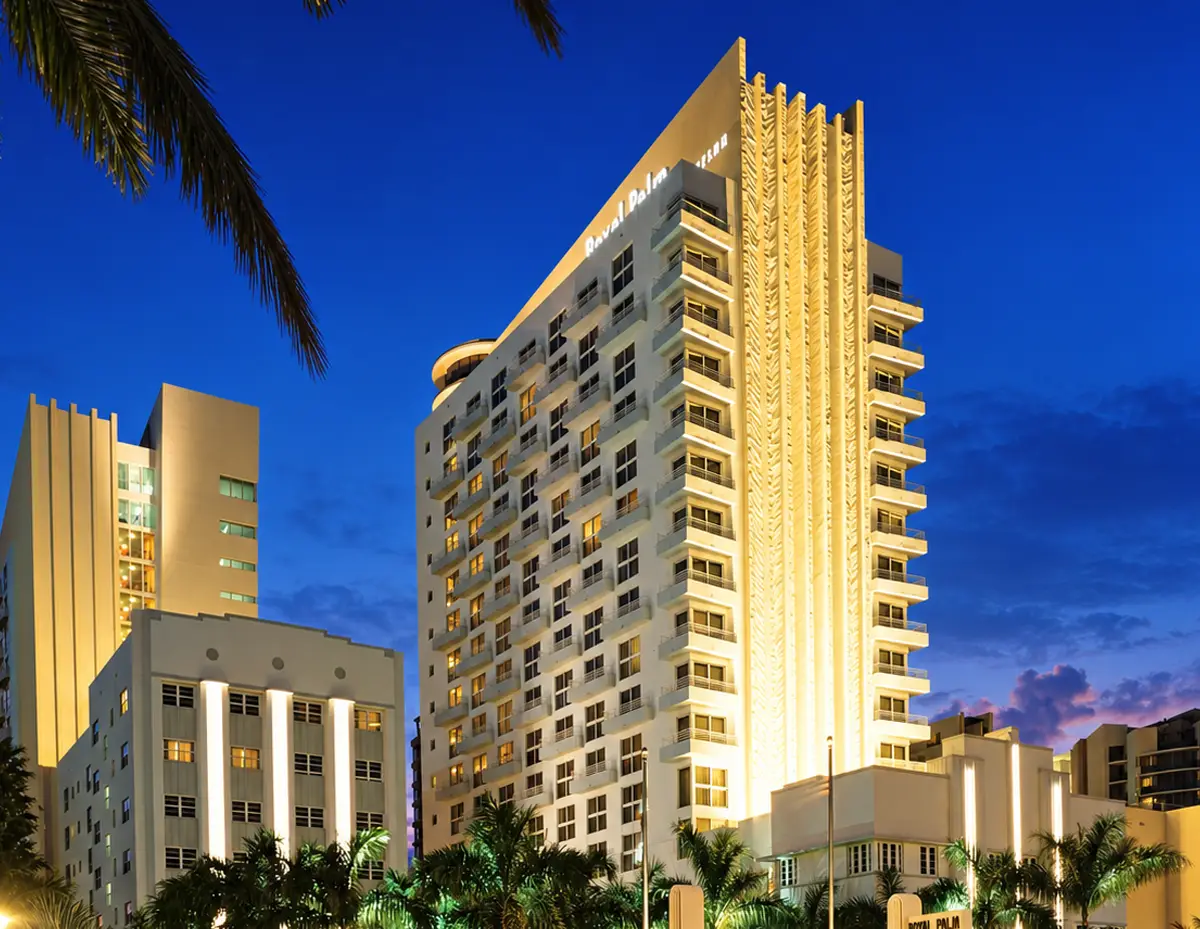
The Royal Palm Hotel
Miami Beach, Florida
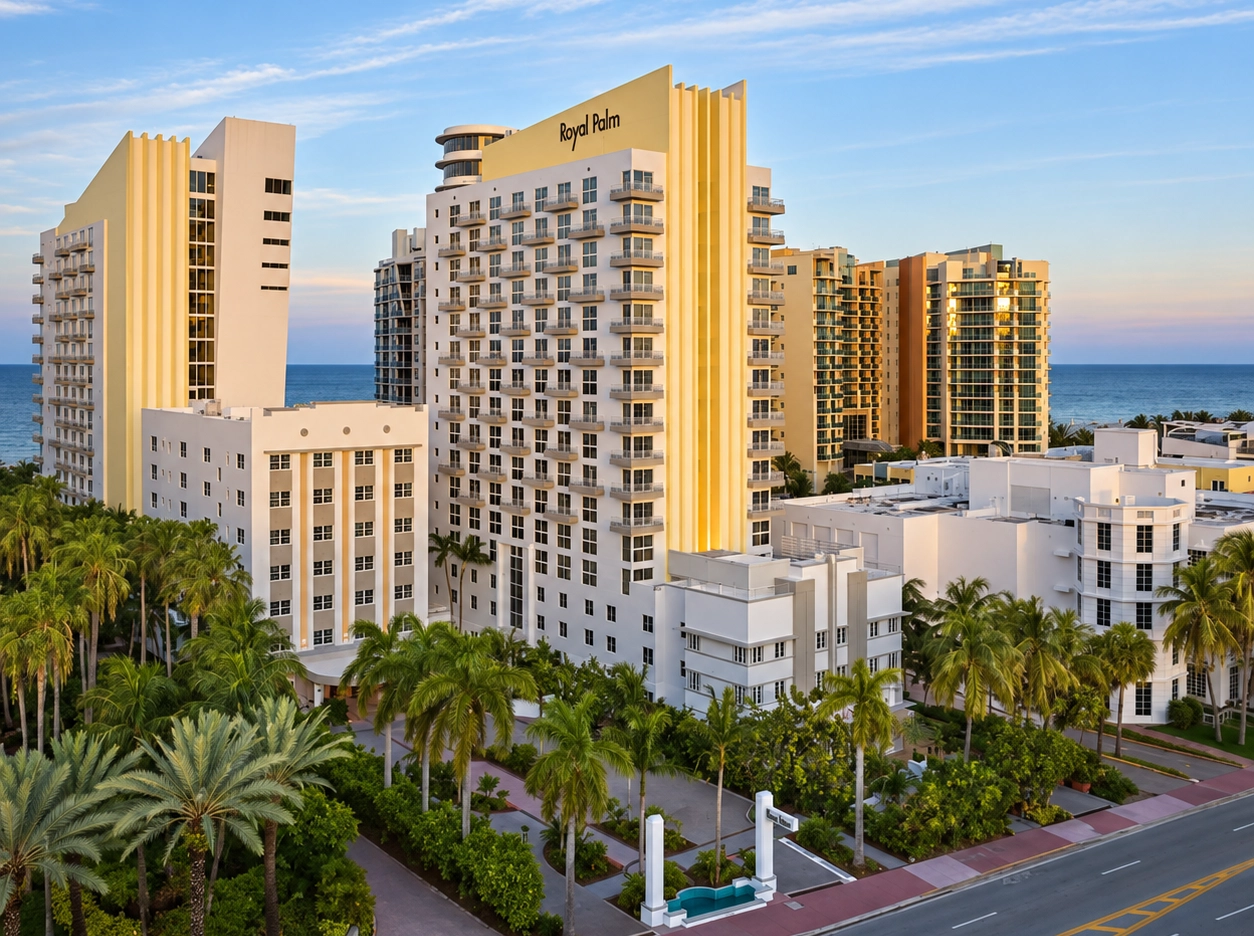
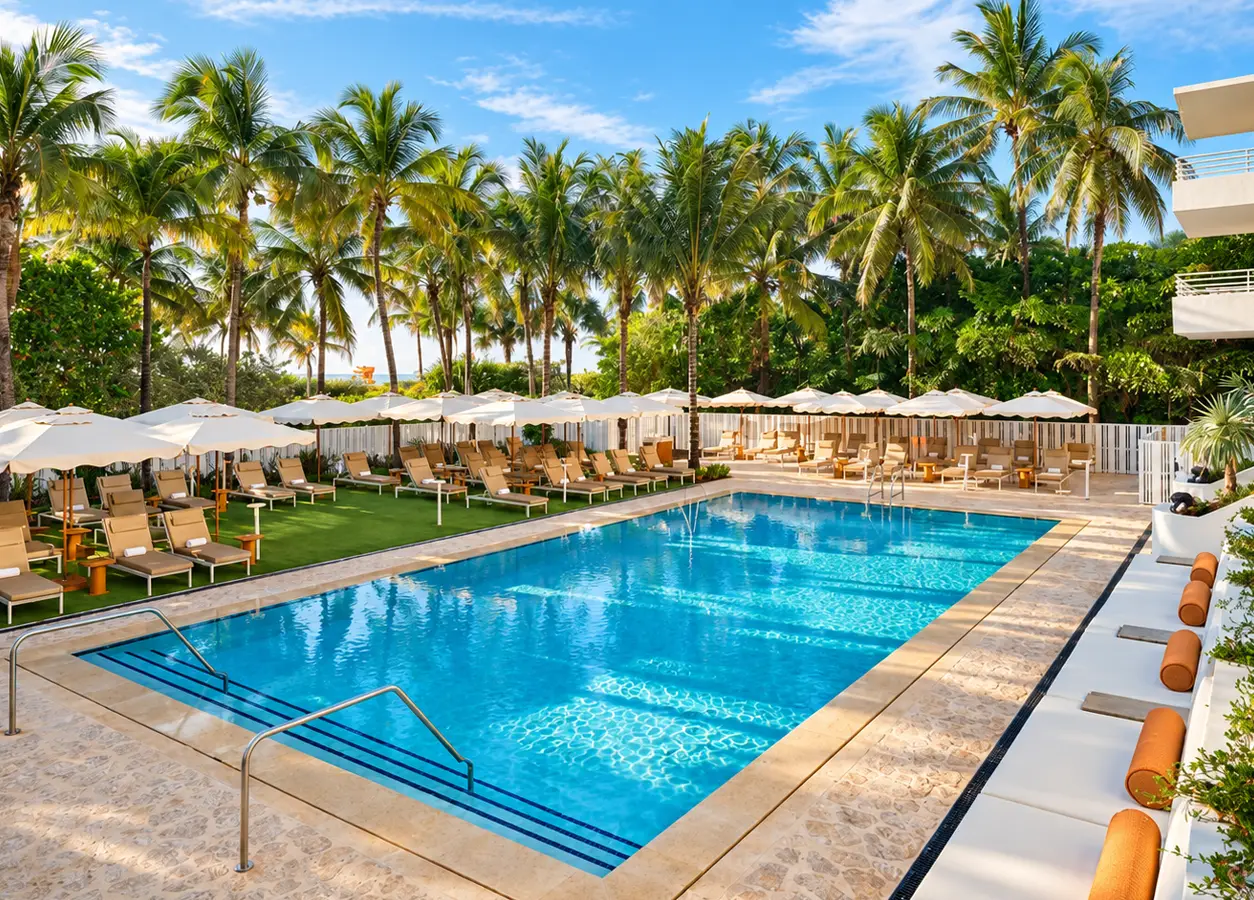
Developed with the City of Miami Beach, the 350,000-square-foot Royal Palm Hotel blended historic preservation with two new 17-story towers. Named its franchise’s “Hotel of the Year,” it balanced historic character, public goals and commercial success.
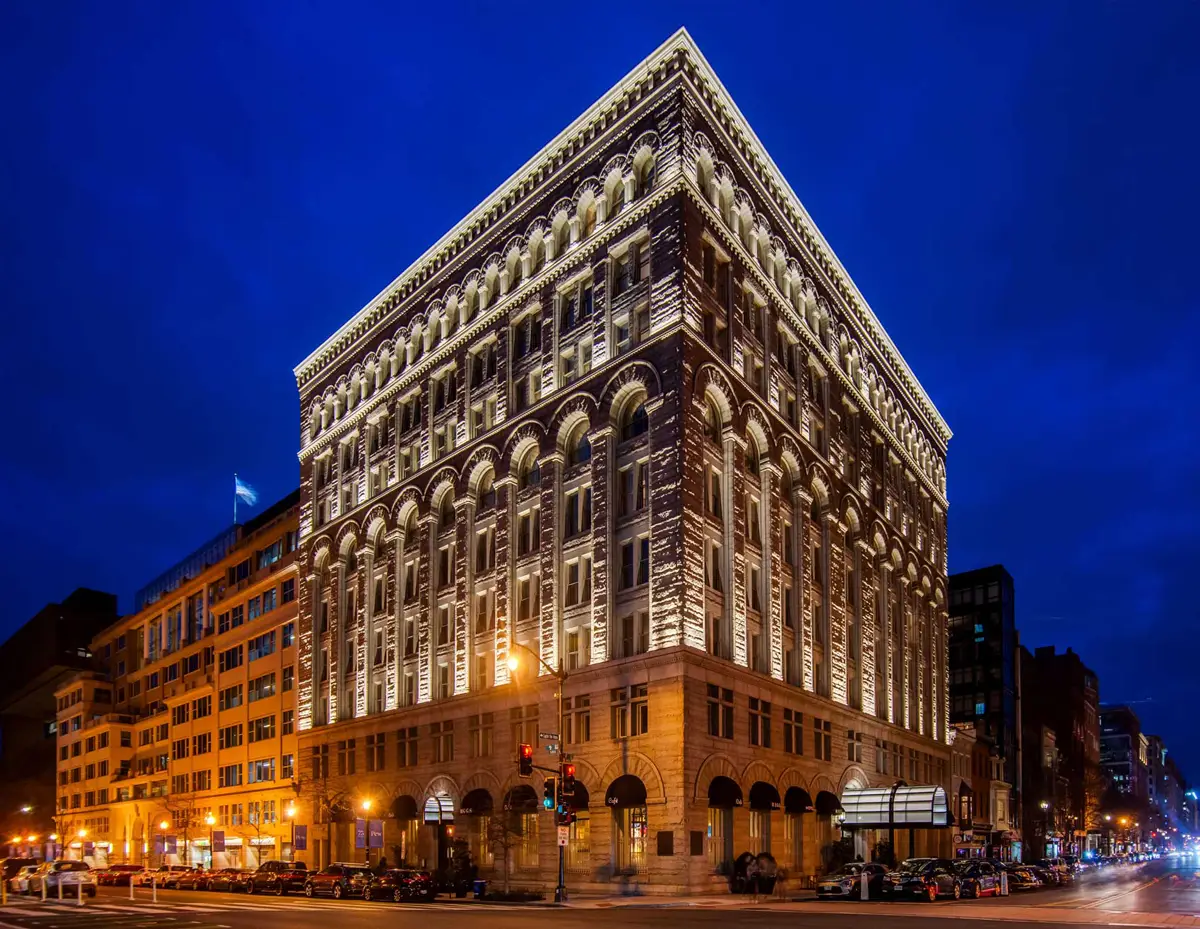
Courtyard by Marriott Convention Center Washington, D.C.
The 135,000-square-foot Courtyard by Marriott Convention Center transformed a historic landmark into a 188-key hotel while preserving its distinctive architecture. It ranked first among Courtyard hotels worldwide for two consecutive years.
Developing Hotels That
Belong in Their Markets
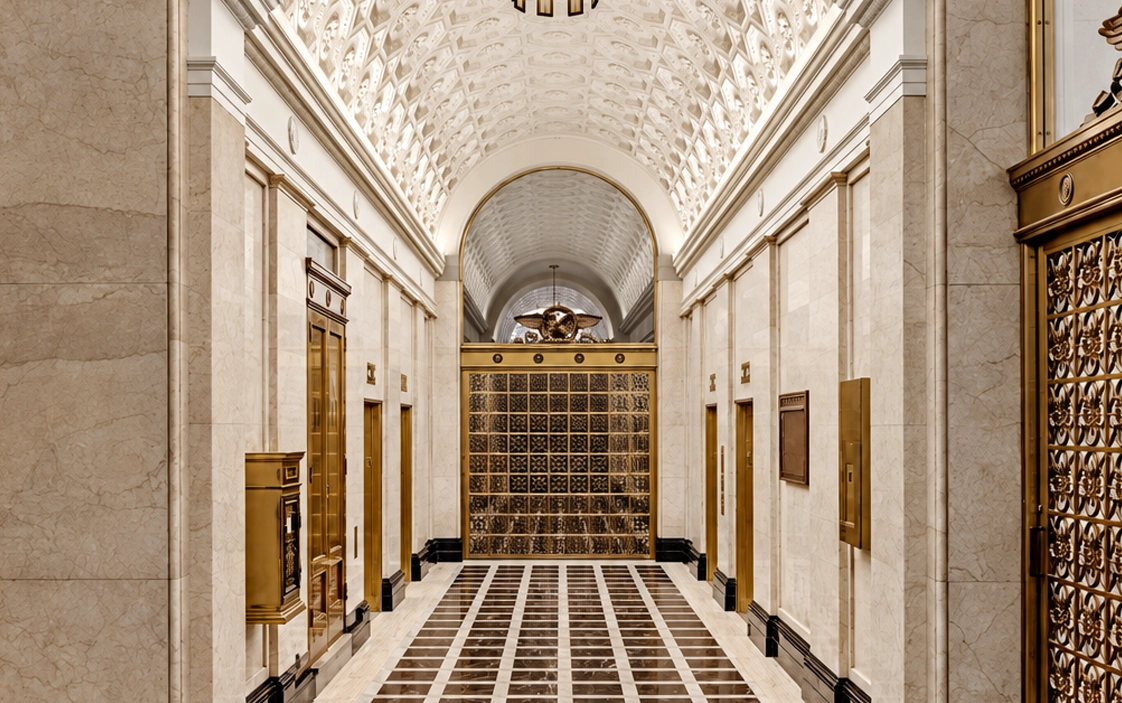
The most valuable hotels are shaped by their location, architecture, surrounding uses and intended guest experience. This is especially true when historic buildings are adapted for hospitality, requiring distinctive character to be preserved while meeting modern operational, brand and guest needs. In luxury hospitality, the site and development concept must create distinction beyond the hotel brand itself.
The Peebles Corporation evaluates each hotel within the larger real estate opportunity, balancing character and functionality while considering the land, market, community and long-term property value.

Hotel Development
Within Larger Mixed-Use Projects
Not every hotel should be a standalone property. In urban markets, hospitality—whether through new construction or adaptive reuse—can strengthen mixed-use developments by supporting residential, retail, entertainment, office and public spaces.
The key question is not simply, “Can we build a hotel here?” but “What role should hospitality play in maximizing the property’s potential?”
With experience across hospitality, residential, commercial and mixed-use development, The Peebles Corporation evaluates hotels within the full context of each real estate opportunity.
Why The Peebles Corporation?
Why The Peebles Corporation?
The Peebles Corporation has developed over 10 million square feet and $8 billion in projects across hospitality and adaptive reuse.
+ Experience developing nationally branded hospitality properties
+ Successful integration of historic preservation and new construction
+ Experience converting landmark buildings into operating hotels
+ Economic inclusion through Affirmative Development™
+ More than 40 years of real estate investment and development experience
+ Hotel development within major U.S. urban markets
+ Extensive experience with public-private partnerships
+ Capabilities across hospitality, residential, retail and mixed-use development
A Development Partner for Public Agencies, Investors and Hospitality Companies
START A CONVERSATION
Discuss Your Hotel Development Project
Through its Affirmative Development™ philosophy, The Peebles Corporation integrates economic opportunities for minority- and women-owned businesses into its projects, helping hotel and mixed-use developments create value beyond the property itself.
Government agencies
Government agencies and municipalities may seek a private development partner to transform underutilized public land while creating jobs, tax revenue and community value.
Government agencies and municipalities
Government agencies and municipalities may be seeking a private development partner capable of transforming underutilized public land while producing economic activity, permanent jobs, tax revenue and meaningful community participation.
Investment and capital partners
Investment companies and capital partners may be evaluating whether a site can support a hotel concept capable of generating attractive long-term value.
Landowners
Landowners may need to determine whether hotel development represents the highest and best use of a property or whether hospitality should form one component of a larger development.
Landowners
Landowners may need to determine whether hotel development represents the highest and best use of a property or whether hospitality should form one component of a larger development.
Hotel companies and brands
Hotel companies and brands may need a real estate development partner capable of translating a hospitality concept into a viable physical property within a complex urban market.
HOTEL DEVELOPMENT
HOTEL DEVELOPMENT
Frequently Asked Questions About Hotel Development
Relevant hotel experience matters, but the more important question is whether the developer has successfully handled projects with challenges similar to the proposed development.
A straightforward ground-up hotel on privately controlled land requires a different skill set from a project involving publicly owned property, historic structures, mixed-use components, complex entitlements or multiple public and private stakeholders.
Organizations evaluating hotel development companies should look at the developer's experience with comparable project structures, ability to coordinate competing interests, understanding of the underlying real estate and track record of turning complicated sites into viable properties.
A public-private partnership can make sense when a hotel project advances both commercial and public objectives.
A municipality, for example, may control strategically located land and want development that generates economic activity, supports tourism or a convention district, creates jobs, increases tax revenue or helps catalyze a larger redevelopment effort. A private developer brings investment, development expertise and the ability to execute the real estate strategy.
The challenge is creating a structure in which the public objectives and private economics reinforce one another.
The Royal Palm Hotel demonstrates this approach. Developed through a public-private partnership with the City of Miami Beach, the project combined historic preservation with substantial new construction and introduced one of the first nationally branded hotels on South Beach.
The decision should begin with the real estate rather than with a predetermined hotel concept.
Location, surrounding demand generators, competing hotel supply, accessibility, development costs, zoning, physical site constraints and alternative uses all influence whether hospitality represents the best use of a property.
In some cases, the strongest opportunity may be a standalone hotel. In others, hospitality may create more value as part of a mixed-use project with residential, retail, entertainment or other commercial components.
Experienced land development companies should be able to evaluate both possibilities rather than assuming that the initially proposed use is automatically the best one.
Hospitality can be particularly valuable within mixed-use development when the hotel strengthens other components of the project.
Hotel guests can support restaurants and retail. Meeting and event activity can increase traffic throughout the development. A recognized hotel brand can help establish the identity of a larger property, while residential, commercial and entertainment uses may create additional demand for the hotel.
The decision ultimately depends on the site, market and economics. The objective should be to determine what combination of uses creates the strongest overall development rather than evaluating each component in isolation.
Successful adaptive reuse requires identifying which characteristics give the building its historic significance while determining how modern hospitality functions can be incorporated without diminishing them.
The Peebles Corporation faced precisely this challenge with the former Washington Loan & Trust building in Washington, D.C., a National Register property constructed in 1891. The redevelopment preserved original marble floors, an ornate gold-leaf ceiling and Corinthian columns while converting the building into a 188-key Courtyard by Marriott Hotel and Convention Center.
The property's subsequent ranking as the number-one performing Courtyard hotel worldwide for two consecutive years is particularly significant because it demonstrates that preservation and hotel performance do not have to be competing objectives.
Brand considerations should be addressed early enough to influence planning, design and positioning, but the underlying real estate opportunity should drive the development strategy.
The appropriate brand depends on the market, location, intended customer, physical characteristics of the property and economics of the project. A brand that works exceptionally well in one location may be poorly suited to another.
For hotel companies seeking a development partner, the same principle works in reverse: successful development requires translating brand and operating requirements into a property that also makes sense within its specific real estate market.
The highest projected value or largest proposed development is not necessarily the strongest proposal.
Public agencies should consider whether the development concept is achievable, whether the developer's experience is relevant to the complexity of the site, how well the proposal addresses the agency's economic and community objectives, and whether the project can attract the investment and partnerships required for execution.
For complicated public sites, the quality of the development strategy can matter as much as the scale of the proposal.
A credible proposal should explain why that development program makes sense for the property and how the developer intends to reconcile public priorities with commercial feasibility.
Strong opportunities usually combine desirable real estate with a credible path to creating long-term value.
That does not necessarily mean an uncomplicated site. Historic properties, underutilized public land and challenging urban parcels can present significant development opportunities when their complexity also creates the possibility of producing something difficult to replicate.
For The Peebles Corporation, the relevant question is whether the site's location, market, development potential and stakeholder objectives create an opportunity for a distinctive and economically viable property.

THE PEEBLES CORPORATION®
NEW YORK
BOSTON
WASHINGTON, DC
CHARLOTTE
ATLANTA
MIAMI BEACH
SAN FRANCISCO


